
> Home > Mitglieder

–> Die Netzwerkmitglieder
A
–> Dr. Laura Affolter
–> Prof. Dr. Sigrid Boysen
–> Prof. Dr. Philipp Degens
–> Prof. Dr. Malte-C. Gruber
–> Dr. Andreas Gutmann
–> Dr. Johan Horst (Co-Koordinator)
–> Prof. Dr. Jens Kersten
–> Prof. Dr. Susanne Krasmann
–> Prof. Dr. Thomas Scheffer
–> Prof’in. Dr. Doris Schweitzer (Koordinatorin)
–> Prof. Dr. Petra_ Sußner
–> Dr. Alina Wandelt
–> Dr. Anna-Lena Wolf
–> Prof. Dr. Olaf Zenker
Z
——
–> Karl Homuth (Studentische Hilfskraft)

Dr. Laura Affolter
Universität Hamburg
–> Kurzvita
Laura Affolter ist wissenschaftliche Mitarbeiterin in der DFG Kolleg-Forschungsgruppe „Zukünfte der Nachhaltigkeit“ an der Universität Hamburg. Sie ist promovierte Sozialanthropologin mit einem Fokus auf Rechts- und politische Anthropologie. In ihrem gegenwärtigen Forschungs- und Habilitationsprojekt beschäftigt sie sich mit dem transformativen Potential von Rechten der Natur, in dem sie am Beispiel von Bergbaukonflikten in Ecuador ethnographisch die Mobilisierung von Rechten der Natur in der Praxis erforscht und dabei nach den politischen, sozialen epistemologischen Effekt solcher Rechtsmobilisierungen fragt. Von 2020 bis Juni 2025 war sie wissenschaftliche Mitarbeiterin in der Forschungsgruppe Rechtssoziologie am Hamburger Institut für Sozialforschung und davor arbeitete sie am Institut für Sozialanthropologie der Universität Bern, wo sie 2017 mit einer Arbeit zu Entscheidungspraktiken in einer Schweizer Asylbehörde promovierte. Die Dissertation ist 2021 bei Palgrave Macmillan in der Serie Socio-Legal Studies unter dem Titel Asylum Matters: On the Front Line of Administrative Decision-Making erschienen.
Laura Affolter is a research associate at the Humanities Centre for Advanced Studies „Futures of Sustainability“ at the University of Hamburg. She holds a PhD in Social Anthropology, specializing in legal and political anthropology. Her current research examines the transformative potential of the rights of nature through an ethnographic study of mining conflicts in Ecuador, focusing on the political, social, and epistemological effects of legal mobilizations. From 2020 to June 2025, she was a research associate in the Sociology of Law research group at the Hamburg Institute for Social Research. Before that, she worked at the Institute of Social Anthropology at the University of Bern, where she completed her PhD in 2017 on decision-making practices in a Swiss asylum bureaucracy. Her dissertation was published in 2021 by Palgrave Macmillan as Asylum Matters: On the Front Line of Administrative Decision-Making.
–> Publikationen
Affolter, Laura, und Siân Affolter. Im Erscheinen. “Rights of Nature in Switzerland: Sketching the Scene”, in: Ralf Michaels und Daniel Bonilla (Hg.), Rights of Nature and Global Legal Pluralism Tübingen: Mohr-Siebeck.
Affolter, Laura. 2025. “Humans as Those Who Must Care and Act: The Mobilizing Rights of Nature in Anti-Mining Struggles in Ecuador”, in: Olaf Zenker und Anna-Lena Wolf (Hg.): Justice in the Anthropocene: An Anthropological Approach. Berlin: Reimer Verlag, S. 127-142.
Affolter, Laura. 2024. “Humans as Those Who Must Care and Act: Mobilizing Rights of Nature in Anti-Mining Struggles in Ecuador”, Zeitschrift für Ethnologie/Journal of Social and Cultural Anthropology, DOI: 10.60827/zfe/jsca.v149i2.1926.
Dietrich, Martha-Cecilia, Laura Affolter, Andreas Gutmann, und Jenny García Ruales. 2024. “Stories of Systemic Failure? Landscaping the Rights of Nature in Europe”, Journal of Legal Anthropology, DOI: 10.3167/jla.2024.080103.
Affolter, Laura. 2020. “The Responsibility to Prevent Future Harm: Anti-Mining Struggles, the State, and Constitutional Lawsuits in Ecuador”, Journal of Legal Anthropology, DOI: 10.3167/jla.2020.040205.
Prof. Dr. Sigrid Boysen
Helmut-Schmidt-Universität, Hamburg
–> Kurzvita
Prof. Dr. Sigrid Boysen (Fakultät für Wirtschafts- und Sozialwissenschaften, Helmut-Schmidt-Universität, Hamburg): Professorin für Öffentliches Recht, Völker- und Europarecht, seit November 2022 Richterin am Hamburgischen Verfassungsgericht. Geschäftsführende Herausgeberin der Zeitschrift ‚Archiv des Völkerrechts‘. Research Fellowships an der Princeton University (2014) und am Institute for Global Law & Policy der Harvard Law School (2021/22). Im akademischen Jahr 2023/24 Fernand Braudel Fellow am European University Institute in Florenz (Law Department). Forschungsschwerpunkte: Transnationales Klimaschutz- und Rohstoffrecht, Theorie und politische Ökonomie des internationalen Rechts, Verfassungsrecht.
Professor Dr Sigrid Boysen (Faculty of Economics and Social Sciences, Helmut Schmidt University, Hamburg): Professor of Public Law, International Law and European Law; judge at the Hamburg Constitutional Court since November 2022. She is the managing editor of the journal Archiv des Völkerrechts (Archive of International Law). She has held research fellowships at Princeton University (2014) and the Institute for Global Law & Policy at Harvard Law School (2021/22). She was Fernand Braudel Fellow in the Law Department at the European University Institute in Florence in the 2023/24 academic year. Main areas of research include: Transnational climate protection and raw materials law; the theory and political economy of international law; and constitutional law.
–> Publikationen
Boysen Sigrid (2021): Die postkoloniale Konstellation: Natürliche Ressourcen und das Völkerrecht der Moderne, Tübingen, Mohr Siebeck.
Boysen, Sigrid (2018): Entgrenzt – pluralistisch – reflexiv – polyzentrisch – kontestiert: Das Transnationale am transnationalen Klimaschutzrecht, in: Zeitschrift für Umweltrecht (ZUR) 12, S. 643-650.
Boysen Sigrid (2012): Grundfragen des transnationalen Klimaschutzrechts, in: Archiv des Völkerrechts 50 (4), S. 377-419, [online] doi: 10.1628/000389212805292108.
Prof. Dr. Philipp Degens
Universität Hamburg
–> Kurzvita
Prof. Dr. Philipp Degens ist seit Oktober 2025 Professor für Social Entrepreneurship und Sozialwirtschaft an der Frankfurt University of Applied Sciences im Fachbereich 4 Soziale Arbeit und Gesundheit. Zuvor vertrat er die Professur für Soziologie, insb. Dynamiken und Regulierung von Wirtschaft und Gesellschaft an der Universität Hamburg und war u.a. Senior Researcher im EU-Horizon Europe Projekt DEMETRA und an der DFG-Kollegforschungsgruppe Zukünfte der Nachhaltigkeit. Er forscht zum Wandel von Eigentumsformen im Anthropozän, zu Commons und Commoning, zu alternativen Wirtschaftsformen, zum Dritten Sektor und zu Philanthropie, wobei er insbesondere rechts-, wirtschafts- und organisationssoziologische Perspektiven integriert. Philipp ist Co-Organizer im Netzwerk Community, Democracy and Organizations der Society for the Advancement of Socio-Economics und Mitglied des Vorstandes der DGS-Sektion Rechtssoziologie.
Prof. Dr. Philipp Degens is Professor of Social Entrepreneurship and Social Economy at Frankfurt University of Applied Sciences in Department 4, Health and Social Work. Previously, he was Acting professor for Sociology, in particular Dynamics and Regulation of Economy and Society, at the University of Hamburg and was i.a. a senior researcher in the EU Horizon Europe project DEMETRA and in the DFG funded Humanities Centre for Advanced Studies Futures of Sustainability. Adopting an interdisciplinary approach that integrates perspectives from legal, economic, political and organizational sociology, his research focuses on the transformation of property forms in the Anthropocene, commons and commoning, alternative economic forms, the third sector, and philanthropy. Philipp is co-organizer of the network Community, Democracy, and Organizations of the Society for the Advancement of Socio-Economics, as well as being a member of the board of the DGS Section for Sociology of Law.
–> Publikationen
Degens, Philipp (2025): Eigentum im Anthropozän. Zu Neuverhandlungen von Freiheit und Verpflichtung, in: Angebauer, Niklas; Blumenfeld, Jacob; Wesche, Tilo (Hg.), Umkämpftes Eigentum. Eine gesellschaftstheoretische Debatte, Berlin: Suhrkamp, S. 489-512.
Degens, Philipp; Neckel, Sighard (Hg.) 2024: Das Scheitern des grünen Kapitalismus. Analysen, Aussichten, Alternativen. Frankfurt a.M.: Campus.
Degens, Philipp 2022: Commoning mit der Natur: Zur Teilhabe nichtmenschlicher Entitäten, in: „Die Vision der »Commons«, ihre Theorie und die Politik des sozialen Erlernens“ – In Erinnerung an Silke Helfrich (1967-2021), Zeitschrift für Gemeinwirtschaft und Gemeinwohl Jg. 45 Heft 2, S. 361-376.
Degens, Philipp (2022): Privateigentum als Instrument der Nachhaltigkeit? Zwischen Willkür und ökologischer Verantwortung, in: Sighard Neckel, Philipp Degens und Sarah Lenz. (Hg.): Kapitalismus und Nachhaltigkeit, S. 237-255. Frankfurt am Main: Campus.
Degens, Philipp/Iris Hilbrich/Sarah Lenz (2022): Analyzing Infrastructures in the Anthropocene, in: Historical Social Research 47(4), S. 7-28, doi: 10.12759/hsr.47.2022.36.
Degens, Philipp (2021): Towards Sustainable Property? Exploring the Entanglement of Ownership and Sustainability, in: Social Science Information 60 (2), S. 209-229, [online] doi: 10.1177/05390184211011437.
Prof. Dr. Malte-C. Gruber
Justus-Liebig-Universität Gießen
Foto: JLU / Rolf K. Wegst
–> Kurzvita
Prof. Dr. Malte-C. Gruber (geb. 1974) studierte Rechtswissenschaft und Philosophie in Frankfurt am Main und Mainz. Nach dem juristischen Vorbereitungsdienst war er ab 2001 als Rechtsanwalt tätig. 2005 wurde er Lehrbeauftragter, 2006 wissenschaftlicher Mitarbeiter und 2010 Akademischer Rat a. Z. am Frankfurter Institut für Arbeits-, Wirtschafts- und Zivilrecht. Malte Gruber promovierte 2005 mit einer rechtsphilosophischen Arbeit zum Thema „Rechtsschutz für nichtmenschliches Leben“. Mit seiner Habilitationsschrift „Bioinformationsrecht. Zur Persönlichkeitsentfaltung des Menschen in technisierter Verfassung“ erwarb er 2014 die Venia Legendi für die Fächer Bürgerliches Recht, Informations- und Medienrecht, Technikrecht und Rechtstheorie. Nach Vertretungsprofessuren an den Universitäten Bremen und Frankfurt wurde er von der Universität Luzern im Frühjahr 2017 zum ordentlichen Professor für Rechtsphilosophie und Wirtschaftsrecht mit Schwerpunkt Immaterialgüterrecht und Recht der neuen Technologien berufen. Seit dem 1. Februar 2023 ist er Professor für Bürgerliches Recht, Rechtsphilosophie und Recht der neuen Technologien an der Justus-Liebig-Universität Gießen.
Prof. Dr. Malte-C. Gruber (born 1974) studied law and philosophy at the universities of Frankfurt/Main and Mainz. Following his legal clerkship, he began work as a practicising lawyer in 2001. In 2005 he obtained a lectureship at the Frankfurt Institute for Employment Law, Commercial Law and Civil Law; in 2006 he was made a research fellow and in 2010 assistant professor at the same institution. His PhD thesis, a legal-philosophical enquiry on the subject of “Legal Protection for Non-Human Life”, was successfully defended in 2005. In 2014, he completed his habilitation thesis on “Bio-Information Law. Being Human in a Technicized World”, on the back of which he was awarded the venia legendi for civil law, information and media law, technology law and legal theory. Following substitute professorships in Bremen and Frankfurt, he has been a full professor of legal philosophy and commercial law with a particular focus on intellectual property law and the law of new technologies at the University of Lucerne since 2017. In 2023, he was appointed professor of civil Law, legal philosophy and the law of new technologies at Justus Liebig University Giessen.
–> Publikationen
„Die Cupola im Anthropozän: Klimahaftungsklagen der Zukunft“, JuristenZeitung (JZ) 78, 2023/10, S. 417–428, DOI: 10.1628/jz-2023-0138.
„Futurities of Law. Versuche über die Zukunft des Rechts“, Archiv für Rechts- und Sozialphilosophie (ARSP) 107, 2021/3, S. 367–391, DOI: 10.25162/ARSP-2021-0019  .
.
„Mensch oder Maschine: Zur Humanität des Rechts nach dem Ende des Menschen“, in: Andreas Funke / Klaus Ulrich Schmolke (Hrsg.), Menschenbilder im Recht, Tübingen: Mohr Siebeck 2019, S. 43–59, DOI: 10.1628/978-3-16-157698-0 .
“Escaping the Epistemic Trap: An Ecological Analysis of Law and Economics”, in: Klaus Mathis / Bruce R. Huber (eds.), Environmental Law and Economics, Cham/Heidelberg/New York/Dordrecht/ London: Springer 2017, pp. 107–121, DOI: 10.1007/978-3-319-50932-7_5 .
„Warum Nicht-Menschenrechte?“, Zeitschrift für Medien- und Kulturforschung (ZMK) 7/2/2016, S. 63–69; englischsprachige Fassung: “Why Non-Human Rights?”, in: Law & Literature 32/2/2020, pp. 263–270, DOI: 10.1080/1535685X.2020.1763598 .
“What Is It Like to Be Unborn? Our Common Fate with Future Generations”, in: Klaus Mathis (ed.), Efficiency, Sustainability, and Justice to Future Generations, LAPS: Law and Philosophy Library 98, Dordrecht/Heidelberg/London/New York: Springer 2011, pp. 113–137; deutschsprachige Fassung: „Biodiversitätsschutz als Forderung intergenerationeller Gerechtigkeit. Zugang zu genetischen Ressourcen, Vorteilsausgleich und Verantwortung für zukünftige Generationen“, Natur und Recht (NuR) 33 (2011), 468–479, DOI: 10.1007/s10357-011-2101-3.
Bioinformationsrecht. Zur Persönlichkeitsentfaltung des Menschen in technisierter Verfassung, Habilitationsschrift Frankfurt am Main 2013, Reihe Jus Privatum, Band 197, Tübingen: Mohr Siebeck 2015, DOI: 10.1628/978-3-16-153692-2.
Rechtsschutz für nichtmenschliches Leben. Der moralische Status des Lebendigen und seine Implementierung in Tierschutz-, Naturschutz- und Umweltrecht, Diss. jur. Frankfurt am Main 2005, Studien zur Rechtsphilosophie und Rechtstheorie, Band 43, Baden-Baden: Nomos 2006.

Dr. Andreas Gutmann
Universität Kassel
–> Kurzvita
Dr. Andreas Gutmann ist wissenschaftlicher Mitarbeiter am Fachgebiet Just Transitions des Kassel Institute for Sustainability sowie dem Institut für Sozialwesen an der Universität Kassel. Im Sommersemster 2025 vertritt er die Professur Öffentliches Recht und Grundlagen des Rechts an der Universität Erfurt. Gegenwärtig beschäftigt er sich mit Rohstoffverwaltungsrecht, insbesondere dem Forst- und Bergrecht mit seinen historischen und transnationalen Bezügen. Weiterhin arbeitet er derzeit zu den Vorstößen für Rechte der Natur in Deutschland und anderen europäischen Ländern.
Er studierte Rechtswissenschaften in Freiburg und Santa Marta, promovierte an der Universität Bremen mit einer Arbeit über Rechte der Natur in Ecuador und absolvierte sein Referendariat am Kammergericht Berlin.
Dr. Andreas Gutmann is research associate at the Department of Just Transitions at the Kassel Institute for Sustainability and the Institute for Social Sciences at the University of Kassel. In the summer semester 2025, he substititutes the Chair of Public Law and Foundations of Law at the University of Erfurt. He is currently working on raw materials management law, in particular forest and mining law with its historical and transnational aspects. Furthermore, he is currently working on the the rights of nature in Germany and other European countries.
He studied law in Freiburg and Santa Marta, received his doctorate from the University of Bremen with a thesis on Rights of Nature in Ecuador and completed his legal clerkship at the Berlin Court of Appeal.
–> Publikationen
Lateinamerikanische Alternativen in der Energiewende. Die Natur als Rechtssubjekt in der ecuadorianischen Verfassung, in: Burchardt/Dietz/Warnecke-Berger (Hrsg.), Grüne Energiewende in Lateinamerika, Nomos 2025, S. 201-216.
Stories of Systemic Failure? Landscaping the Rights of Nature in Europe (mit Martha-Cecilia Dietrich, Laura Affolter und Jenny García Ruales), Journal of Legal Anthropology 8 (2024), 46-76.
Der Critical Raw Materials Act und das deutsche Bergrecht, DVBl 2024, 1385-1391.
Transformation des Rechts durch das Recht? Zum transformativen Potential von Rechten der Natur (mit Elena Ewering und Janina Reimann), KJ 2024, 346-353.
Finding a path to Europe for the rights of nature (mit Elena Ewering und Tore Vetter), in: García Ruales/Hovden/Kopnina/Robertson/Schoukens (Hrsg.) Rights of Nature in Europe: Encounters and Visions, Routledge 2024, S. 180-195.
Die Rechte der Natur. Zur ökologischen Eigenrechtsidee, in Mitscherlich-Schönherr/Cojocaru/Reder (Hrsg.), Kann das Anthropozän gelingen? Krisen und Transformationen der menschlichen Naturverhältnisse im interdisziplinären Dialog, De Gruyter 2024, S. 275-295.
Systems Theory of Global Animal Law (mit Andreas Fischer-Lescano), in: Peters/Stilt/Stucki (Hrsg.), Oxford Handbook of Global Animal Law, Oxford University Press 2024 i.E., überarbeitete deutsche Fassung: Systemtheorie der Globalen Tierrechte, RW Rechtswissenschaft 2023, 451-466.
Hybride Rechtssubjektivität – Die Rechte der Natur oder Pacha Mama in der ecuadorianischen Verfassung von 2008 (Beiträge zum ausländischen öffentlichen Recht und Völkerrecht, Band 307), Nomos 2021.
Dr. Johan Horst
MPI für Rechtsgeschichte und Rechtstheorie, Frankfurt a.M.
Co-Koordinator
–> Kurzvita
Studium der Rechtswissenschaften in Berlin, Paris und Washington D.C. (LL.M. Georgetown). Rechtsreferendariat am Kammergericht Berlin. Wissenschaftlicher Mitarbeiter am Lehrstuhl von Andreas Fischer-Lescano und im ERC-Projekt Transnational Force of Law als Leiter der Säule Lex Financiaria (Universität Bremen). Promotion bei Andreas Fischer-Lescano und Gunther Teubner. Postdoktorand am Integrative Research Institute „Law & Society“ (LSI) der Juristischen Fakultät der Humboldt-Universität zu Berlin. Seit 01/2022 Wissenschaftler am MPI für Rechtsgeschichte und Rechtstheorie (Abteilung Multidisziplinäre Rechtstheorie – Marietta Auer). Zur Zeit Vertretung der Professur für Völkerrecht, Recht der Europäischen Union und Internationale Beziehungen an der TU Dresden.
Johan Horst studied law in Berlin, Paris and at Georgetown University, Washington D.C. (LL.M.). He worked as a researcher at the chair of Andreas Fischer-Lescano, completed his PhD (supervisors: Andreas Fischer-Lescano and Gunther Teubner) and headed the subproject Lex Financiaria in the ERC-project Transnational Force of Law at the Universität Bremen. Subsequently, he held a position as a post-doctoral researcher at the Integrated Research Institute ‚Law & Society‘ at the Humboldt-Universität zu Berlin and is now a researcher at the Max-Planck-Institute for Legal History and Legal Theory.
–> Publikationen
Entanglements: The ambivalent role of law in the Anthropocene, in: Journal of Human Rights and the Environment 15/1 (2024), S. 83-106.
Inequality, Law and Distribution in Transnational Financial Markets, in: European Journal of International Law, 33/1 (2022), S. 97-130.
Recht und Umwelt zwischen Schutz und Gestaltung. Das Beispiel des Solar Radiation Managements, in: Mattfeldt, Anna; Schwegler, Carolin; Wanning, Berbeli (Hrsg.), Natur, Umwelt, Nachhaltigkeit. Perspektiven auf Sprache, Diskurse und Kultur, De Gruyter 2021, S. 165-193.
Transnationale Gewaltenteilung und Gewaltengliederung. Eine Gewaltenteilungslehre für die transnationale Konstellation, DÖV 2020, Heft 8, S. 313-322.
Gegenrechte. Recht jenseits des Subjekts (hrsg. zus. mit Fischer-Lescano, Andreas/Franzki, Hannah), Mohr-Siebeck 2018.
Prof. Dr. Jens Kersten
Ludwig-Maximilians-Universität, München
–> Kurzvita
Prof. Dr. Jens Kersten (Juristische Fakultät, Ludwig-Maximilians-Universität, München): Jens Kersten bekleidete seit 2008 eine Professur für Öffentliches Recht und Verwaltungswissenschaften an der Ludwig-Maximilians-Universität München. Er war Carson Professor am Rachel Carson Center for Environment and Society der Ludwig-Maximilians-Universität München (2012-2013). Die Forschungsschwerpunkte von Jens Kersten bilden das Verwaltungs-, Verfassungs- und Europarecht, Biomedizin und Recht, Natur und Gesellschaft im Anthropozän, Wandel und Gefährdung der Demokratie sowie gesellschaftliche Polarisierung und sozialer Zusammenhalt.
Professor Dr Jens Kersten (Faculty of Law, Ludwig Maximilian University, Munich): Jens Kersten has held a professorship in public law and administrative sciences at Ludwig Maximilian University in Munich since 2008. He was Carson Professor at the Rachel Carson Center for Environment and Society at Ludwig Maximilian University in Munich (2012-2013). His research focuses on administrative, constitutional and European law; biomedicine and law; nature and society in the Anthropocene; change and threats to democracy; and social polarisation and social cohesion.
–> Publikationen
Katrin Böhning-Gaese; Jens Kersten; Helmuth Trischler Rettet die Vielfalt. Manifest für eine biodiverse Gesellschaft, Stuttgart: Klett-Cotta 2025.
Jens Kersten: Manifestes Denken, in: Veronika Böhm/Sonja Heitzer/Lena Köhn/Patrick Zimmermann (Hrsg.), Protestkulturen. Kontroversen um Klima und Umwelt im demokratischen Verfassungsstaat, Tübingen 2025, S. 27-41.
Jens Kersten: Governance im Anthropozän, in: Aus Politik und Zeitgeschichte (APuZ) 14-15/2025, S. 39-45.
Jens Kersten: Die Ökologisierung des Eigentums, in: Niklas Angebauer/Jacob Blumenfeld/Tilo Wesche (Hrsg.), Umkämpftes Eigentum. Eine gesellschaftstheoretische Debatte, 2025, S. 467-488.
Jens Kersten: Konviviale Nachhaltigkeit. Begriff – Konzept – Dogmatik, in: Neue Zeitschrift für Verwaltungsrecht (NVwZ) 2024, S. 614-620.
Jens Kersten: Ökologie ins Grundgesetz, in: Frankfurter Allgemeine Zeitung (FAZ), 21.6.2024, S. 15.
Jens Kersten: Ecological Constitutionalism: A Necessity, in: Springs: The Rachel Carson Center Review, no. 4 (October 2023). https://springs-rcc.org/ecological-constitutionalism.
Elisabeth Kaupp; Jens Kersten: Die Verfassung einer prospektiven Gesellschaft. Wie zukunftsoffen ist das Grundgesetz?, in: Juristische Schulung (JuS) 2022, S. 473-482.
Jens Kersten: Die dritte Revolution: Für ein ökologisches Grundgesetz, in: Blätter für deutsche und internationale Politik 6/2022, S. 91-102.
Jens Kersten: Das ökologische Grundgesetz, München: C. H. Beck 2022.
Jens Kersten: Das Anthropozän-Konzept. Kontrakt – Komposition – Konflikt, Baden-Baden: Nomos 2014.
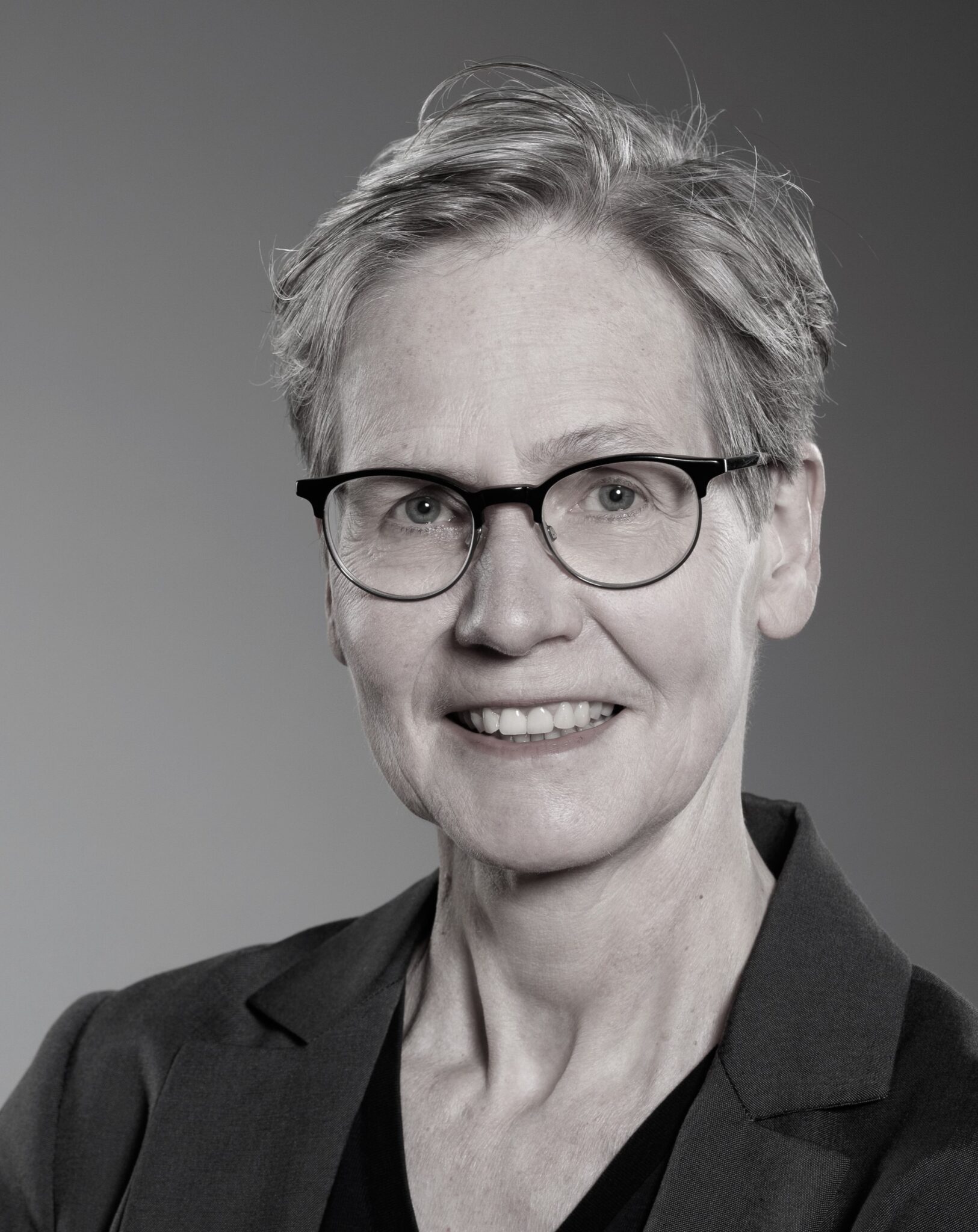
Prof. Dr. Susanne Krasmann
Universität Hamburg
–> Kurzvita
Susanne Krasmann ist Professorin für Soziologie am Fachbereich Sozialwissenschaften der Universität Hamburg. Im Rahmen ihrer derzeitigen Forschung zur Zerstörung von Architektur im Anthropozän erprobt sie das „Leben“ als ein Konzept kritischer Gegenwartsanalyse. Susanne Krasmann knüpft damit an ihre Forschungsarbeiten zu Sicherheitsdispositiven, Affekt und Wahrheitsregimen, Verletzlichkeit und das Politische sowie zu Studien der Gouvernementalität an.
Susanne Krasmann is Professor of Sociology at the Department of Social Sciences, Universität Hamburg. In her current research on Architecture in the Anthropocene she explores the notion of “life” as a critical figure of thought for the analysis of our present. Susanne Krasmann has published extensively in the field of Security Dispositifs, Vulnerability and the Political, Truth Regimes, Affect and Governmentality Studies.
–> Publikationen
Hentschel, Christine & Krasmann, Susanne. 2024. “Collapse awareness in the face of climate breakdown and urbicide”, Critical Studies on Security, Special Issue on Situational Awareness: sensing insecurity and coming catastrophes, https://doi.org/10.1080/21624887.2024.2403795.
Krasmann, Susanne. 2023. “Abandoning Humanity? On Cultural Heritage and the Subject of International Law”, Law, Culture and the Humanities 19 (1), 89-105 (© 2019), https://doi.org/10.1177/174387211984360.
Krasmann Susanne. 2022. „Gewalt im Anthropozän. Die Situation der Zerstörung“, Mittelweg 36 31(6), 25-42.
Krasmann, Susanne. 2021. “Architecture in the Anthropocene: The Notre-Dame de Paris fire and the ‘force’ of ‘culture’”, Anthropocenes: Human, Inhuman, Posthuman 2(1), 1-10, https://doi.org/10.16997/ahip.929.

Prof. Dr. Thomas Scheffer
Goethe-Universität Frankfurt a.M.
–> Kurzvita
Scheffer, Thomas, ist Professor für Soziologie und Sozialpsychologie mit dem Schwerpunkt Interpretative Sozialforschung am Institut für Soziologie, Fachbereich Gesellschaftswissenschaften der Goethe-Universität Frankfurt. Seit 2 Jahren ist Scheffer Sprecher der DGS-Sektion Methoden der Qualitativen Sozialforschung. Scheffer forscht zur Praxis staatlicher Gewalten und veröffentlichte hier mehrere Ethnographien, u.a. „Asylgewährung“ (2001), „Adversarial Case Making“ (2010), „Criminal Defence and Procedure“ (2010, mit Kati Hannken-Illjes und Alexander Kozin) oder jüngst „Polizeilicher Kommunitarismus“ (2017, mit Christiane Howe, Eva Kiefer, Yannik Porsché und Dörte Negnal).
Scheffer, Thomas, is Professor for Sociology and Socialpsychology with the emphasis on Interpretative Social Research at the Institute for Sociology, Department for Social Sciences, Goethe-University Frankfurt. Scheffer was spokesperson of the Section Sociology of Law and the Section Qualitative Methods of the German Sociological Association. Currently is Pro-Dean at his Department of Social Sciences. Scheffer conducted ethnographic and discourse analytical research on state apparatuses. He published books on „Granting Asylum“ (dt., 2001), „Adversarial Case-Making“ (2010), „Criminal Defence and Procedure“ (2010, with Kati Hannken-Illjes & Alexander Kozin) and „Police Communitarism“ (dt., 2017, mit Christiane Howe, Eva Kiefer, Yannik Porsché & Dörte Negnal). He developed the trans-sequential analysis and applied it to formulate a „Critical Ethnomethodology“ (dt. 2019, ZfS).
–> Publikationen
2024: Gesellschaften unter Handlungszwang: Existenzielle Probleme, Normalität und Kritik. IfS Aus der Reihe. Bertz + Fischer. (mit Stephan Lessenich)
2024: Responding before responseability. Towards the wicked realization of Climate Change. Special Issue on Planetary Responsibility edited by Stephen Humphreys & Alain Pottage, London Review of International Law.
2024: Apparate und Apparaturen: Für eine soziologische Kasuistik de/stabilisierter Problemarbeiten. In: Echterhölter, A., Lorenz, CF., Richter, T. (eds) Apparate. Administration Studies. Formen und Medien der Verwaltung, Vol. 3. J.B. Metzler, Berlin, Heidelberg.
2023: Trans-Sequenzierend Codieren. Themenschwerpunkt: Trans-Sequenzielle Analyse. Sozialer Sinn 24(2): 283-314. (mit Ronja Trischler)
2022: Soziologie im Klimawandel. Protokoll des Revisionsbedarfs. WestEnd.
2021: Existentielle Probleme, soziologisch. Zeitschrift für Theoretische Soziologie (ZTS), (1).
2020: Kritische Ethnomethodologie. Zeitschrift für Soziologie 49(2-3): 111-128.
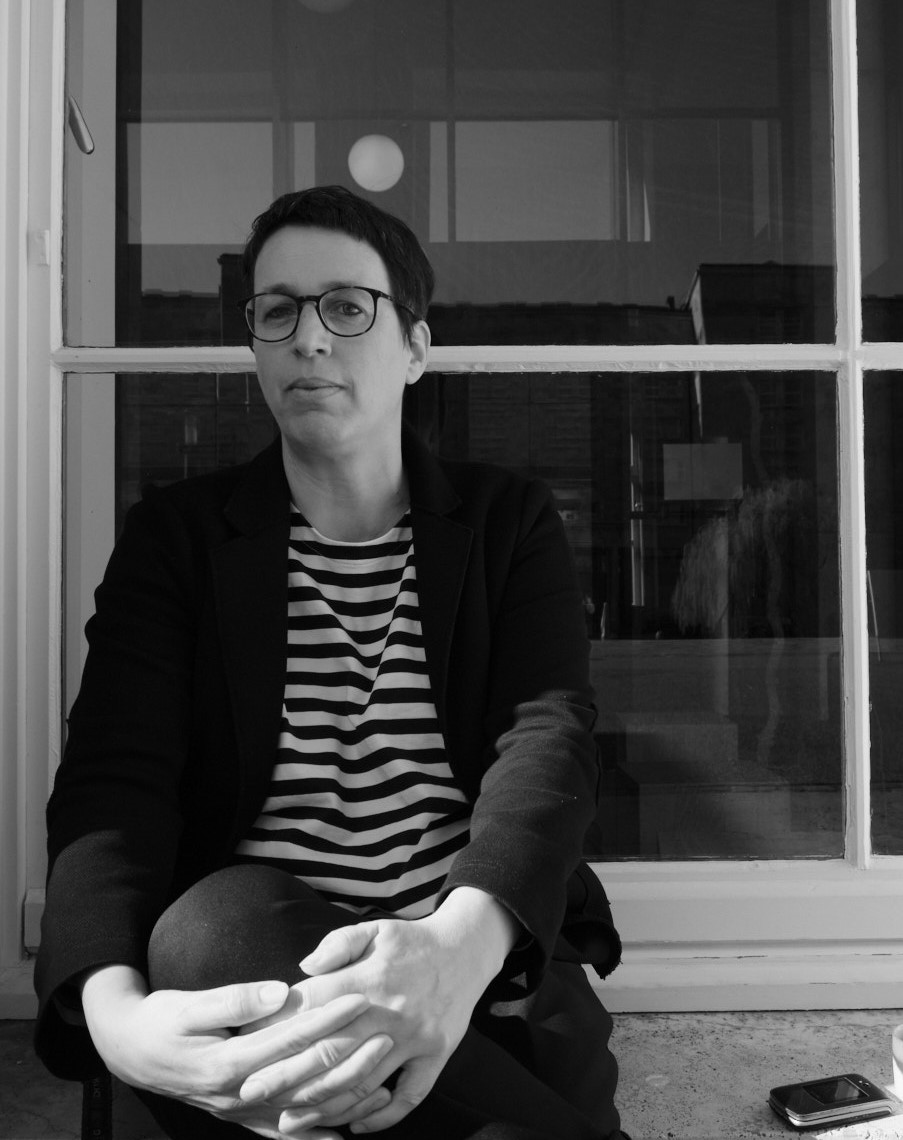
Prof’in. Dr. Doris Schweitzer
Goethe-Universität Frankfurt a.M.
Koordinatorin
Foto: Veit Braun
–> Kurzvita
Prof. Dr. Doris Schweitzer (Institut für Soziologie, Fachbereich Gesellschaftswissenschaften der Goethe-Universität Frankfurt): Doris Schweitzer ist seit 2021 Professorin für Soziologie mit dem Schwerpunkt Soziologische Theorie und Theoriegeschichte an der Goethe-Universität Frankfurt. Neben dem historischen Interesse am Verhältnis von Soziologie und Rechtswissenschaft liegen ihre Forschungsschwerpunkte im Bereich der Rechtssoziologie und Gesellschaftstheorie. Aktuell beschäftigt sie sich mit der Frage nach einer „rechtlichen Neuordnung der Dinge“, wie sie im Recht insbesondere auch angesichts der Klimakrise erkennbar wird.
Professor Dr Doris Schweitzer (Institute of Sociology, Department of Social Sciences, Goethe University Frankfurt): Since 2021, Doris Schweitzer has been Professor of Sociology, specialising in sociological theory and the history of theory, at Goethe University Frankfurt. Alongside her historical interest in the relationship between sociology and law, her research focuses on the sociology of law and social theory. She is currently working on the question of a “legal reordering of things,” which is becoming increasingly apparent in law, particularly in the context of the climate crisis.
–> Publikationen
Schweitzer, Doris (2020): Anthropozän, „Rechte der Natur“ und Naturvertrag: Zur Aktualität Michel Serres‘, in: Reinhold Clausjürgens und Kurt Röttgers (Hg.): Michel Serres. Das vielfältige Denken, S. 213-230. Paderborn: Wilhelm Fink.
Schweitzer, Doris (2021a): “Rights of things”, in: Nature and Culture 16 (1), S. 28-46, [online] doi:10.3167/nc.2020.160103.
Schweitzer, Doris (2021b): Juridische Soziologien. Recht und Gesellschaft von 1814 bis in die 1920er Jahre. Baden-Baden: Nomos. Open Access: https://www.nomos-elibrary.de/10.5771/9783748909736/juridische-soziologien.
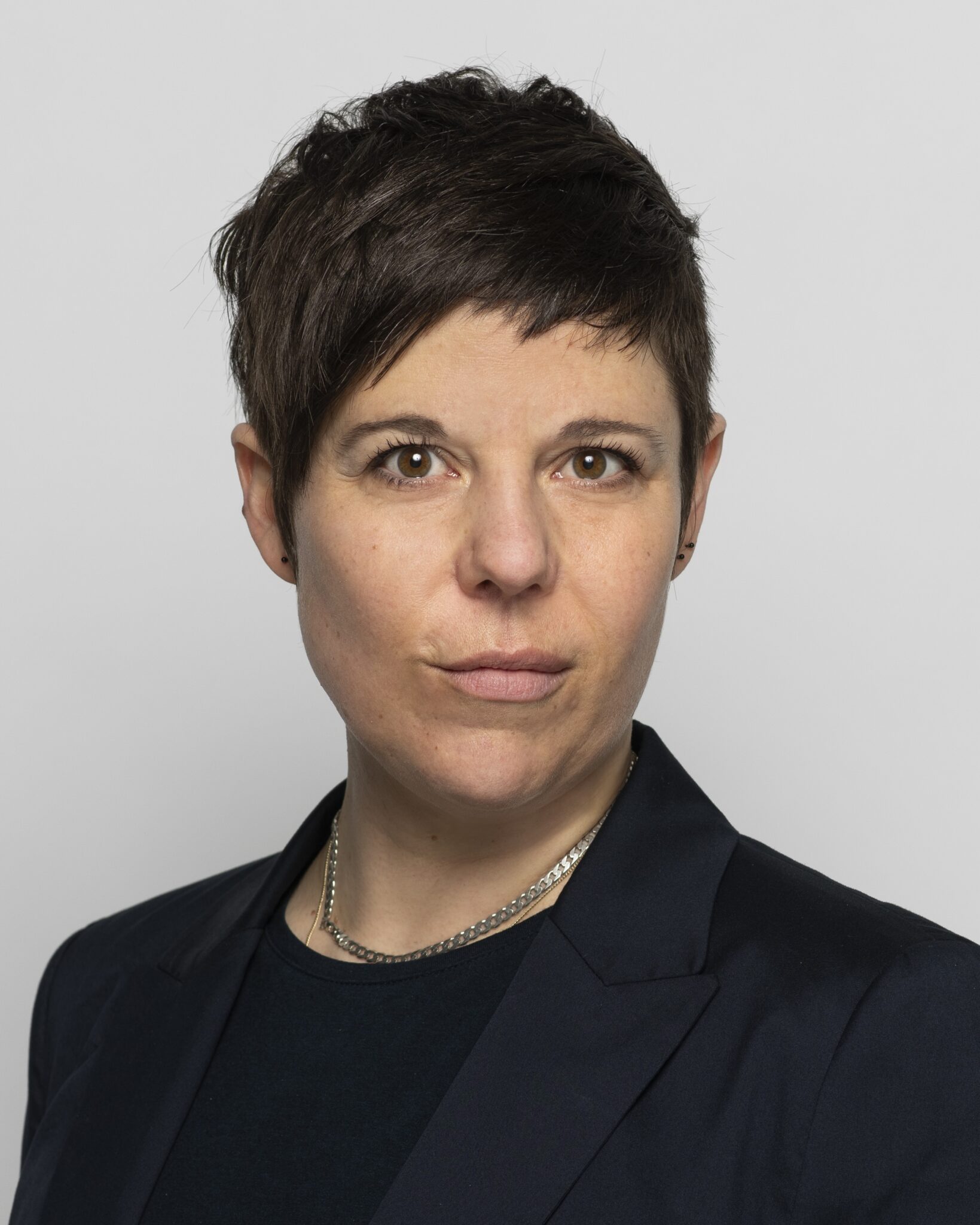
Prof. Dr. Petra_ Sußner
Hochschule für Wirtschaft und Recht Berlin
–> Kurzvita
Petra_ Sußner ist mit einer Gastprofessur für Recht, insbesondere Geschlechterfragen im Recht an der Hochschule für Wirtschaft und Recht Berlin tätig. Fachliche Schwerpunkte umfassen Öffentliches Recht, Grund- und Menschenrechtsschutz , interdisziplinäre Rechtsforschung. An der Humboldt Universität zu Berlin koordinierte Petra_ Sußner u.a. das DFG Projekts „Anspruch auf eine gemeinsame Welt? Geschlecht in Umweltrecht und Umweltklagen“. Die Promotion an der Universität Wien ist mehrfach ausgezeichnet und unter dem Titel „Flucht-Geschlecht-Sexualität. Eine menschenrechtsbasierte Perspektive auf Grundversorgung und Asylberechtigung“in der Juristischen Schriftenreihe des Verlag Österreich erschienen. An der Schnittstelle von Wissenschaft und Kunst ist Petra_ Sußner als Teil des Performance Kollektivs „Epistemic Ruptures“ tätig und wirkte zuletzt an der Lecture Performance „Response_ability on Trial. Disrupting the Anthropocene“ mit.
Petra Sußner holds a visiting professorship in law, with a focus on gender issues in law, at the Berlin School of Economics and Law. Areas of expertise include public law, fundamental and human rights, and interdisciplinary legal research. At Humboldt University Berlin, they coordinated the DFG-funded project „Claiming a Common World? Gender in Environmental Law and Climate Litigation“. Petra Sußner received their PhD from the University of Vienna („Flight, Gender, Sexuality: A Human Rights Based Perspective on Reception and International Protection“. As a member of the performance collective Epistemic Ruptures, Sußner co-created the lecture performance „Response_ability on Trial. Disrupting the Anthropocene“.
–> Publikationen
Westphal Ida/Sußner, Petra, 2025, Substantielle Gleichheit durch Klimaschutz im Recht?, in. : Forschungsgruppe „Recht-Geschlecht-Kollektivität“ (Hrsg.): Recht umkämpft. Feministische Perspektiven auf ein neues Gemeinsames. Opladen: Barbara Budrich, S. 137-158, DOI: https://doi.org/10.3224/84743101.08.
Sußner, P. (2025): Ökologische Krise als Menschenrechtskrise. Eine Gleichstellungsperspektive. Hintergrundpapier für den Vierten Gleichstellungsbericht der Bundesregierung, Berlin: Bundesstiftung Gleichstellung. https://www.gleichstellungsbericht.de/static/b6f1a68056e2970fd79354da1f0a65a1/HP_Sussner_Oekol-Krise_20250407.pdf.
Sußner, Petra: Intersectionality in Climate Litigation: The Case of KlimaSeniorinnen v. Switzerland at the ECtHR, VerfBlog, 2023/4/20, https://verfassungsblog.de/intersectionality-in-climate-litigation/, DOI: 10.17176/20230420-204539-0.

Dr. Alina Wandelt
Goethe-Universität Frankfurt a.M.
–> Kurzvita
Dr. Alina Wandelt (Institut für Soziologie, Fachbereich Gesellschaftswissenschaften der Goethe-Universität Frankfurt): Alina Wandelt ist wissenschaftliche Mitarbeiterin am Institut für Soziologie der Goethe-Universität in Frankfurt und promovierte Kultursoziologin sowie studierte Politikwissenschaftlerin und Anglistin. In ihrer Dissertation befasste sie sich mit sozialem Wandel durch Digitalisierung mit einem Fokus auf Raum und Architektur.
Dr Alina Wandelt (Institute of Sociology, Department of Social Sciences, Goethe University Frankfurt): Alina Wandelt is a research assistant at the Institute of Sociology at Goethe University in Frankfurt. She holds a doctorate in cultural sociology and studied political science and English. Her dissertation focused on social change through digitalization, with an emphasis on space and architecture.
–> Publikationen
…

Dr. Anna-Lena Wolf
Max-Planck-Institut für ethnologische Forschung
–> Kurzvita
Dr. Anna-Lena Wolf ist Ethnologin mit einem thematischen Fokus auf Politik-, Rechts-, und Religionsanthropologie. In verschiedenen Forschungsprojekten hat sie die Beziehung zwischen alltäglichen Gerechtigkeitsvorstellungen, rechtlichen Transformationen und mehr-als-menschlicher Handlungsfähigkeit untersucht.
Dr Anna-Lena Wolf is a social and cultural anthropologist with a thematic focus on political, legal, and religious anthropology. In various research projects, she has explored the relationship between everyday concepts of justice, legal transformations, and more-than-human agency.
–> Publikationen
Zenker, Olaf, and Anna-Lena Wolf. Eds. 2025. Justice in the Anthropocene: An Anthropological Approach. Berlin: Reimer. https://www.reimer-mann-verlag.de/controller.php?cmd=detail&titelnummer=101723&verlag=4.
Wolf, Anna-Lena. 2025. Labor on the Line: Justice at Work on Assam Tea Plantations. Ithaca: Cornell University Press. https://www.cornellpress.cornell.edu/book/9781501783371/labor-on-the-line/#bookTabs=1.
Zenker, Olaf, and Anna-Lena Wolf. Eds. 2024: Justice in the Anthropocene. Special Issue. In: Zeitschrift für Ethnologie ǀ Journal of Social and Cultural Anthropology 149 (2). https://zfejsca.org/ojs/index.php/jsca/issue/view/149-2/71.
Zenker, Olaf, and Anna-Lena Wolf. 2024. “Towards a New Anthropology of Justice in the Anthropocene: Anthropological (Re)turns.” Zeitschrift für Ethnologie ǀ Journal of Social and Cultural Anthropology 149 (2): 189-216. https://zfejsca.org/ojs/index.php/jsca/article/view/1921/2019.
Wolf, Anna-Lena. 2024. „Sozial- und kulturanthropologische Zugänge zu Religionen und Recht am Beispiel einer Untersuchung verschiedener Perspektiven auf göttliches Recht im katholischen Kirchenrecht.“ In: Zugänge zu Recht und Religionen: Inter- und Transdisziplinäre Blickwinkel, edited by Dieter Krimphove und Markus Globisch, S. 131-154. Baden-Baden: Nomos-Verlag. https://www.nomos-elibrary.de/10.5771/9783748918851.pdf.
Wolf, Anna-Lena. 2023. “’No Justice—No Rest!’: How Activist Conceptions of Justice Influence Categories of Collective Identification among Tea Plantation Laborers in Assam” Zeitschrift für Ethnologie ǀ Journal of Social and Cultural Anthropology 148 (1): 1–20. https://zfejsca.org/ojs/index.php/jsca/article/view/1259/Wolf.
Wolf, Anna-Lena. 2023. “’It Would Taste Better with Sugar’— Navigating Deprivation and Confidence in Everyday Life on a Tea Plantation in Assam.” Anthropology and Humanism 48(2): 319–327. https://doi.org/10.1111/anhu.12432.
Wolf, Anna-Lena. 2022. “Beyond ‘enclaves:’ Post-Colonial Labor Mobility to and from Assam Tea Plantations.” Anthropology of Work Review 43 (1): 49-58. http://dx.doi.org/10.1111/awr.12235.

Prof. Dr. Olaf Zenker
Martin-Luther-Universität Halle-Wittenberg
–> Kurzvita
Prof. Dr. Olaf Zenker (Institut für Ethnologie und Philosophie, Philosophische Fakultät I der Martin-Luther-Universität Halle-Wittenberg) ist Professor für Ethnologie mit Schwerpunkt Politik- und Rechtsanthropologie und Gründungssprecher der AG „Politik- und Rechtsanthropologie – Political and Legal Anthropology“ der Deutschen Gesellschaft für Sozial- und Kulturanthropologie (DGSKA). Seine regional in Südafrika, Deutschland und Nordirland verorteten Forschungen behandeln rechtliche und politische Themen wie Gerechtigkeit im Anthropozän, soziale Ungleichheit, Konjunkturen des Rechts als Modalität der Transformation, Eigentumsregime und Landreform, plurale normative Ordnungen, moderne Staatlichkeit und Bürokratie, public anthropology sowie philosophische Anthropologie und neuer Humanismus.
Professor Dr Olaf Zenker (Institute for Ethnology and Philosophy, Faculty of Philosophy I at Martin Luther University Halle-Wittenberg) is a professor of ethnology specializing in political and legal anthropology and founding spokesperson for the working group “Politik- und Rechtsanthropologie – Political and Legal Anthropology” of the German Society for Social and Cultural Anthropology (DGSKA). His research, which is based in South Africa, Germany, and Northern Ireland, deals with legal and political topics such as justice in the Anthropocene, social inequality, economic cycles of law as a modality of transformation, property regimes and land reform, plural normative orders, modern statehood and bureaucracy, public anthropology, philosophical anthropology, and new humanism.
–> Publikationen
Zenker, Olaf (2016): Anthropology on Trial: Exploring the Laws of Anthropological Expertise. In: International Journal of Law in Context 12 (3), S. 293-311, [online] doi:10.1017/S174455231600015X.
Zenker, Olaf/Cherryl Walker (2024): Beyond Expropriation Without Compensation: Law, Land Reform and the Future of Redistributive Justice in South Africa. In: Olaf Zenker/Cherryl Walker/Zsa-Zsa Boggenpoel (Hg.): Beyond Expropriation Without Compensation (S. xxx-yyy). Cambridge: Cambridge University Press.
Zenker, Olaf/Anna-Lena Wolf: Towards a New Anthropology of Justice in the Anthropocene: Anthropological (Re)turns, in: Zeitschrift für Ethnologie | Journal of Social and Cultural Anthropology 150(1).
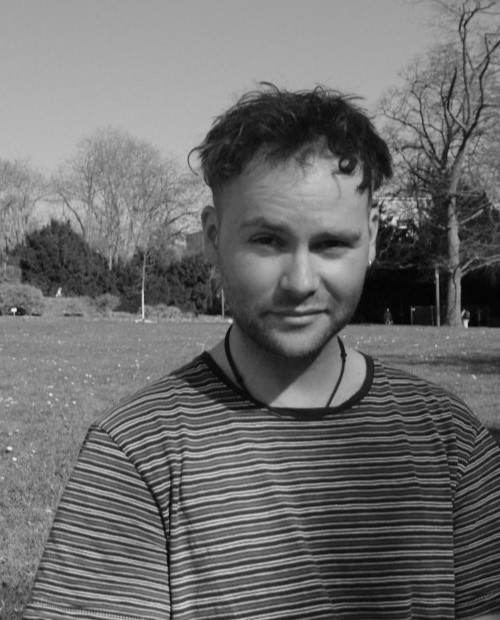
Karl Homuth
Goethe-Universität Frankfurt a.M.
Studentische Hilfskraft
Foto: Veit Braun
–> Kurzvita
Karl Homuth studiert im Master Soziologie an der Goethe-Universität Frankfurt. Seinen Bachelor in Sozialwissenschaften machte er an der Humboldt-Universität zu Berlin. Nach Stationen in Forschungsprojekten an der Technischen Universität Berlin und dem Wissenschaftszentrum Berlin für Sozialforschung ist er nun für das RiA-Netzwerk tätig. Karl beschäftigt sich theoretisch wie empirisch mit der Transformation von Mensch-Umwelt-Beziehungen und der Rolle des Rechts und der Wissenschaft in der Aushandlung und Gestaltung von Landnutzung.
Karl Homuth is a sociology student in the master program at Goethe University Frankfurt. He completed his bachelor’s degree in social sciences at Humboldt University Berlin. Following positions in research projects at Technical University Berlin and the Social Science Research Centre Berlin, he now works as a student assistant for the research network RiA. Karl is theoretically and empirically interested in the transformation of human-environment relationships and the role science and law play in shaping and negotiating land use.
–> Publikationen
Homuth, Karl (2025). Wie ein Bach zum Politikum wird. Ein Infrastrukturkonflikt aus trans-sequentieller Perspektive. In: Berliner Debatte Initial, 35(4), S. 512–529. DOI: https://doi.org/10.25162/bdi-2024-0031.
Homuth, Karl (2025). Das Osterfeuer und die Baumfrage. Zum Zusammenhang von kulturellem Wandel und Klimawandel. Fallstudien der Feld- und Diskursforschung, hrsg. vom Schwerpunkt Interpretative Sozialforschung. Frankfurt am Main: Universitätsbibliothek Johann Christian Senckenberg. DOI: https://doi.org/10.21248/gups.88266.
Homuth, Karl (2024). Field guide to the patchy Anthropocene [Rezension]. In: Ökologisches Wirtschaften 39(3), S. 53–54.